Monica Fletcher Is Leading Auberle into the Digital Future
By Jonathan Kersting
 When people talk about innovation in Pittsburgh, the spotlight usually lands on robotics, software, AI startups, or the next company scaling out of a lab or accelerator. But one of the region’s most important technology transformations is unfolding in a place where the stakes are measured a little differently.
At Auberle in McKeesport, Monica Fletcher is helping build the digital infrastructure behind human services.
Recently promoted to the organization’s first-ever Chief Administrative Officer, Fletcher is leading a quiet but consequential transformation inside the 75-year-old nonprofit, bringing data discipline, process redesign, and carefully governed AI tools to an organization that serves more than 5,000 people across 22 counties. Her mission is not to make Auberle more “techy” for the sake of appearances. It is to reduce friction, strengthen sustainability, and give frontline staff more time to do what matters most: help people.
That challenge is tailor-made for Fletcher’s background. Before joining Auberle two years ago as Director of Strategic Initiatives, she spent her career in the for-profit world, working in market research, management consulting, strategy, and data analysis. She built a career around helping organizations use information to make better decisions. When she saw Auberle was looking for someone to help lead strategy, she recognized something rare: a human services organization that understood the value of building with intention. As Fletcher put it, “To see a human services organization that was focused on strategy… it’s a really special place to be.”
That strategic mindset is arriving at the right time.
Anchoring a Community
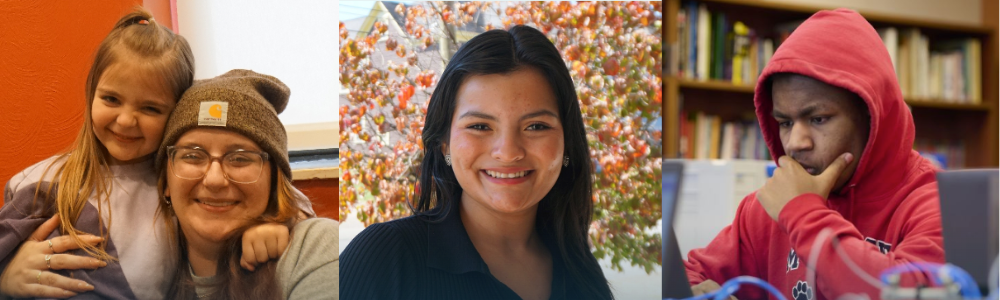
Auberle has deep roots in the Mon Valley. Founded originally as an orphanage, the organization has evolved into a broad human services provider with programs spanning foster care, behavioral health, housing stabilization, employment support, and services for young adults aging out of foster care. Its model is holistic by design. A person may enter through one program, but the issues they face often stretch far beyond a single need. Auberle’s work is about meeting people where they are, then helping them move toward where they want to go.
For Fletcher, the biggest obstacle to doing that work even better is not mission drift. It is administrative drag.
Inside many nonprofits, critical systems still depend on paper forms, physical files, wet signatures, and fragmented workflows that eat away at time and energy. Fletcher has seen the scale of that burden up close. In one part of the interview, she describes walking into rooms lined with filing cabinets and folders, the sheer volume of documentation still required to keep services moving. It is the kind of legacy infrastructure that quietly taxes every employee and every process.
Her response has been to push Auberle toward a simple but powerful principle: people over paper.
That philosophy is now showing up in a series of “data strategy meetings” Fletcher is holding with teams across the organization. Program by program, she is mapping where friction lives, identifying inefficient processes, and rethinking how data can be captured digitally and used more effectively. The effort is as much about culture as it is about systems. Fletcher is working to move Auberle from manual and analog processes and systems toward more automated and digital solutions, without losing the deeply human heart of the work. As she explains, the goal is to find “what are the processes that are causing friction” and create efficiencies that also lead to better-informed decisions.
That combination matters. In human services, every minute saved on paperwork can become a minute spent with a family in crisis, a young person facing housing instability, or a staff member trying to navigate a difficult case.
Tech in Action
One of the first areas to undergo this redesign is Auberle’s Homebuilders program, which supports families in crisis and helps stabilize them. Fletcher is using the program as a pilot for form digitization and workflow improvement, with a close eye on what happens next. At Auberle, she says, measurement is non-negotiable. If new processes are introduced, the organization wants to know exactly what they deliver, especially whether staff gain more face time with program participants.
That instinct to measure the outcome, not just admire the tool, is one of the clearest ways Fletcher’s private-sector experience is reshaping the organization.
It is also shaping how Auberle approaches AI.
Fletcher is currently leading the rollout of Microsoft Copilot within a governed environment, using it as a practical support tool for staff rather than a flashy experiment. Today, that means helping with document review, communication clarity, and identifying gaps in written materials. Tomorrow, it could mean reducing the time staff spend on case notes and other documentation-heavy tasks that pull them away from direct service.
Her response has been to push Auberle toward a simple but powerful principle: people over paper.
But Fletcher is careful, and intentionally so. In a field like foster care or behavioral health, technology cannot replace trust, judgment, or empathy. At Auberle, the message is clear: AI is there to support people-first work, not substitute for it. “People aren’t going away,” she said. “This is people first work.”
That balance may be the most compelling part of Fletcher’s leadership. She is not treating digital transformation like a trend piece. She is treating it like operational infrastructure.
That same mindset guided another major move in early 2025, when Fletcher used financial modeling to help shift Auberle to an ICHRA health insurance model. The decision was about more than benefits administration. It was a sustainability play, designed to give employees more choice while helping the organization build a stronger financial foundation for the future.
Taken together, these changes tell a larger story, one that extends well beyond Auberle.
Breaking the Cycle
For years, nonprofits have been trapped in what many sector leaders call the starvation cycle, expected to maximize outcomes while underinvesting in the very systems that make better outcomes possible. Technology, analytics, and process redesign are often dismissed as overhead. Fletcher’s work makes the opposite case. In a modern nonprofit, those investments are not overhead. They are mission infrastructure.
“To see a human services organization that was focused on strategy… it’s a really special place to be.”
And perhaps that is what makes her such an intriguing figure in Pittsburgh’s broader innovation economy. She represents a growing but still underappreciated trend: the migration of private-sector talent into human services, where business discipline and data strategy can be used not to chase margin, but to expand impact.
Fletcher knows this kind of change does not happen overnight. In the interview, she connected the work to another part of her life: ultramarathon running. Having completed 100-mile races, she understands endurance, adjustment, and the long discipline of staying with a challenge until the finish line comes into view. For Auberle, that may be the perfect metaphor. Transformation at this scale is not a sprint. It is a long run through difficult terrain, with real lives hanging in the balance.
But the direction is clear.
In the Pittsburgh region, Monica Fletcher is helping prove that some of the most meaningful tech work in the region is not always about launching the next big thing. Sometimes it is about building the systems that allow people to serve, support, and change more lives, with less friction and more purpose. No doubt, she's in it for the long run!