Blade Diagnostics Keeps Fighter Jets Flying From Pittsburgh
 There is a moment in every fighter jet story when speed gets all the glory.
The afterburner lights. The aircraft soars into the sky. The pilot disappears into a hard blue horizon where physics, training and technology all get tested at once.
But long before that jet ever screams off a runway, long before it pulls Gs, dodges threats or becomes the sharp edge of American airpower, someone has to know the engine is ready. Not guessed. Not probably. Known.
That is where Pittsburgh’s Blade Diagnostics enters the flight plan.
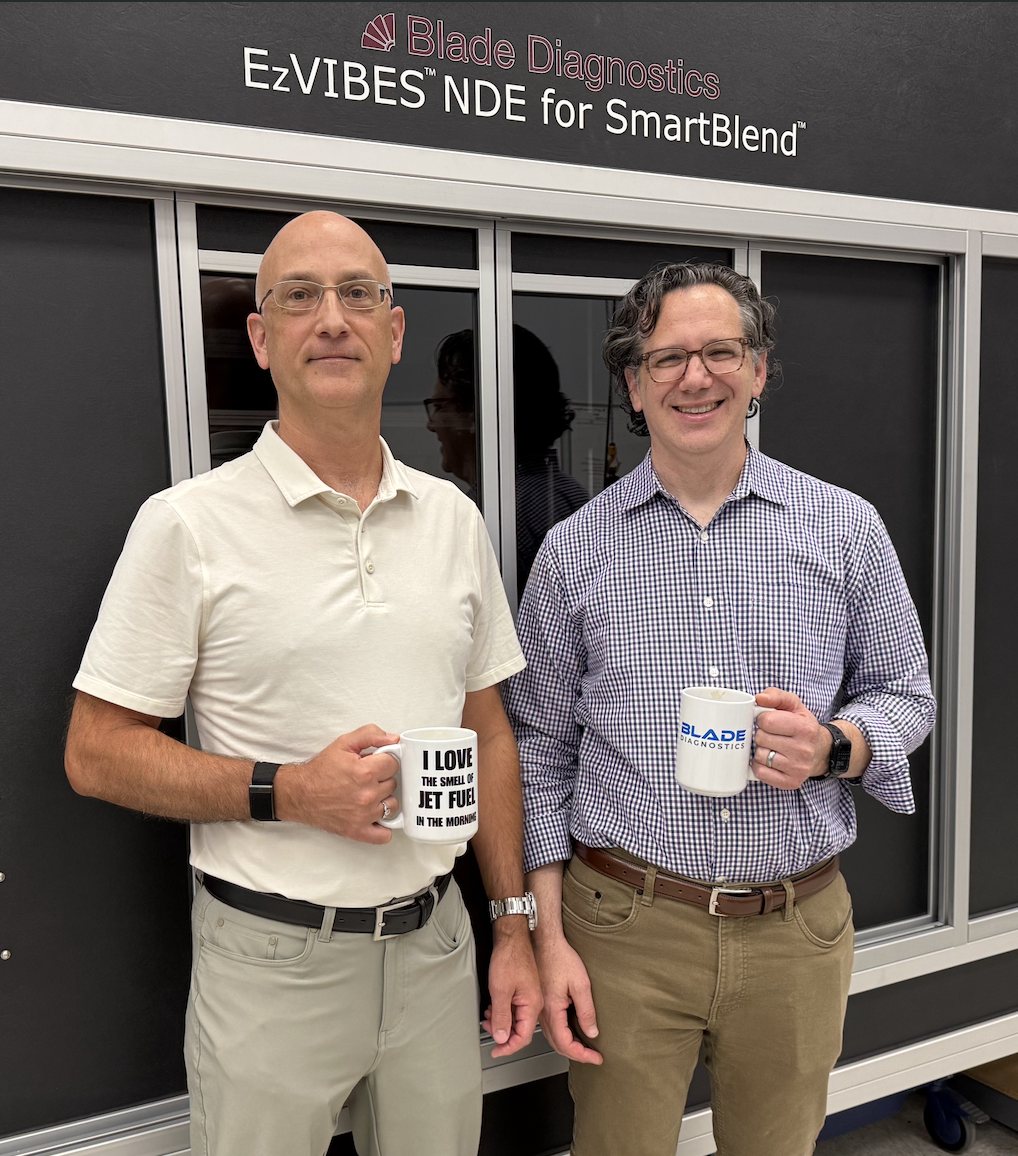
Founded out of Carnegie Mellon University research and built on the region’s deep legacy in power, engineering and advanced manufacturing, Blade Diagnostics develops technology that helps keep military aircraft engines safe, ready and maintainable. It is a highly specialized company working on one of aviation’s most demanding challenges: understanding how individual blades inside advanced jet engines behave, degrade and respond after damage or repair.
“We keep aircraft flying safely,” said Dan Ryan, President and CEO of Blade Diagnostics. “We make sure the engines are ready, that they’re safe, that they’re affordable, that they can be maintained.”
That simple explanation hides a deeply complex mission.
Blade Diagnostics focuses on integrally bladed rotors, often called IBRs. Unlike older engine designs where individual blades can be removed and replaced, IBRs combine blades and disk into a single, highly engineered component. They are lighter and more efficient, but they are also expensive, difficult to make and extremely challenging to repair.
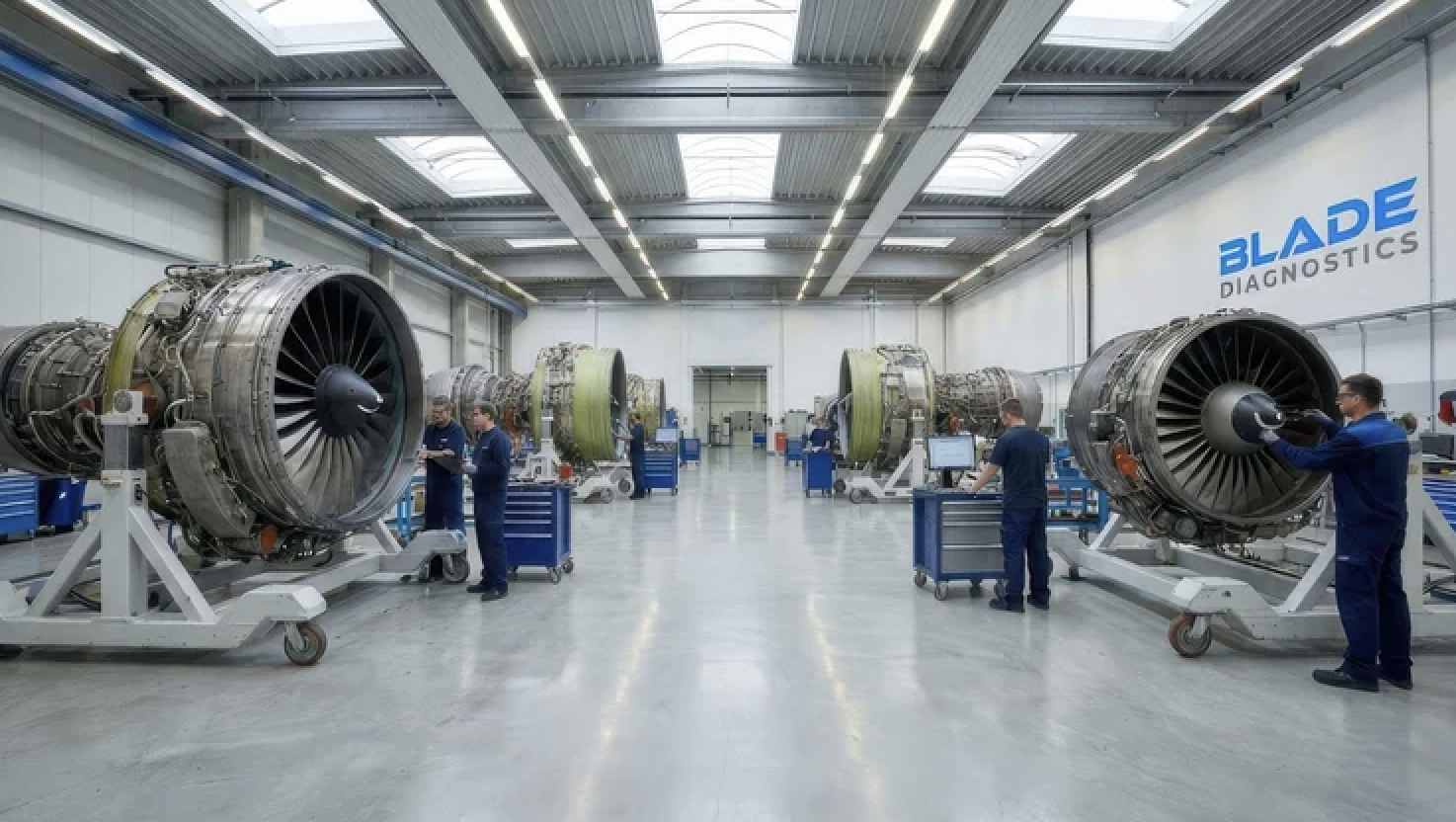 Ryan said only a handful of suppliers around the world can manufacture these parts at the level required for advanced military and commercial engines. That creates a serious supply-chain challenge. If a damaged IBR must be replaced instead of repaired, that replacement part is one less component available for a new engine or another aircraft.
“If we can use our Smart BlendR technology, then we can repair more instead of having to replace,” Ryan said. “So then that helps the whole supply chain bottleneck issue.”
Blade Diagnostics’ Smart Blend technology helps engineers determine whether damaged blades can be safely repaired and returned to service. The technology grew from vibration research conducted at Carnegie Mellon by Dr. Jerry Griffin and Dr. Drew Feiner, now Vice President for Technical Development and one of the company’s founders.
Feiner explained that each blade has its own vibration characteristics, almost like a bell with its own tone. But once the blades are part of a complete rotor, they are all connected and “talk to one another,” creating a complex system. Blade Diagnostics’ technology measures how the assembled rotor vibrates, then uses that data to identify the behavior of individual blades.
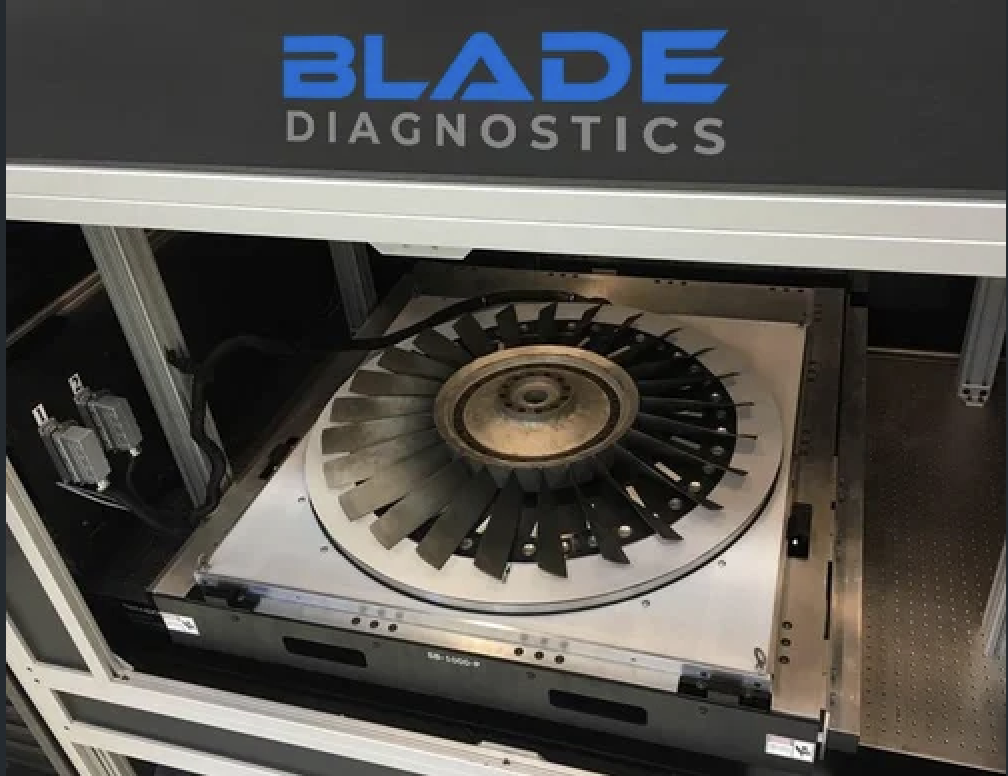 “What you want to know is, is blade one a little bit higher frequency than blade two?” Feiner said. “Is there a crack there that someone might not be able to see with the naked eye?”
That ability matters because small changes can create big consequences. A tiny geometric variation, a crack, a repair blend or foreign-object damage can change how the entire rotor behaves. Instead of relying only on visual inspections or analytical models, Blade Diagnostics uses measured vibration data to generate what Ryan called “the real answer.”
“The test only takes a few hours at most,” Ryan said. “And you’ve got the real answer.”
For the military, that level of confidence is mission critical.
Blade Diagnostics’ technology is currently being used with engines for the F-22 Raptor, one of the most advanced fighter aircraft ever built. That is significant because the F-22 fleet is finite, and its parts are no longer being manufactured at the same scale. Keeping existing aircraft healthy and available is not just a maintenance priority. It is a readiness imperative.
“When you’ve got a fixed fleet of F-22s, you don’t want to fool around,” Ryan said. “You want to know what’s going on with it.”
 The company is also looking ahead to the F-35 and next-generation aircraft, where engine designs continue to grow more advanced. Ryan pointed to the future of adaptive cycle engines, which can shift airflow to balance fuel efficiency and extreme performance. Those designs will create even more complex vibration environments, making high-fidelity blade diagnostics increasingly important.
Blade Diagnostics is developing another product, SightaraTM, to support that future. While Smart Blend is focused on depot-level inspection and repair, Sightara is being developed to inspect engines while they are still in the aircraft. For the F-35, that could mean reducing unnecessary engine removals, preserving aircraft availability and giving maintainers better data in the field.
That matters because removing an engine from a fighter jet is far different from servicing an engine hanging under the wing of a commercial airliner. On aircraft like the F-22 and F-35, the engine is buried deep inside the airframe. Pulling it can be costly, time-intensive and operationally disruptive.
Sightara is designed to help create a “digital thread” for the engine, connecting data from field inspections with depot-level Smart Blend data. By tracking components by serial number and continuously building a history of how they behave, Blade Diagnostics can help enable better maintenance decisions and eventually more predictive approaches.
“It enables all of that,” Ryan said of the potential for predictive analytics. “You need the highest quality, highest fidelity information to feed into those models.”
While the military is Blade Diagnostics’ primary market today, the commercial opportunity is clear. Commercial airlines face their own pressures around engine reliability, aircraft availability, maintenance costs and data-driven operations. As Ryan noted, commercial aviation is highly regulated, and any new inspection approach must navigate FAA and OEM requirements. But the underlying value proposition translates: better data, fewer unnecessary removals, more informed repairs and longer asset life.
The company’s path reflects one of Pittsburgh’s great strengths. Blade Diagnostics was born from university research, shaped by deep engineering expertise and connected to the region’s long legacy in power generation, turbines and advanced manufacturing. Ryan himself came through Westinghouse and Siemens Energy before returning to Pittsburgh to lead Blade Diagnostics, a full-circle story that ties today’s defense innovation back to the region’s industrial roots.
In a city known for building things that move power, steel, robotics, software and now lunar landers, Blade Diagnostics is another reminder that Pittsburgh’s technology economy reaches into places most people never see.
Even inside the engines of America’s most advanced fighter jets.