Pittsburgh's Tech Industry Takes Center Stage at CES 2026
By Jonathan Kersting
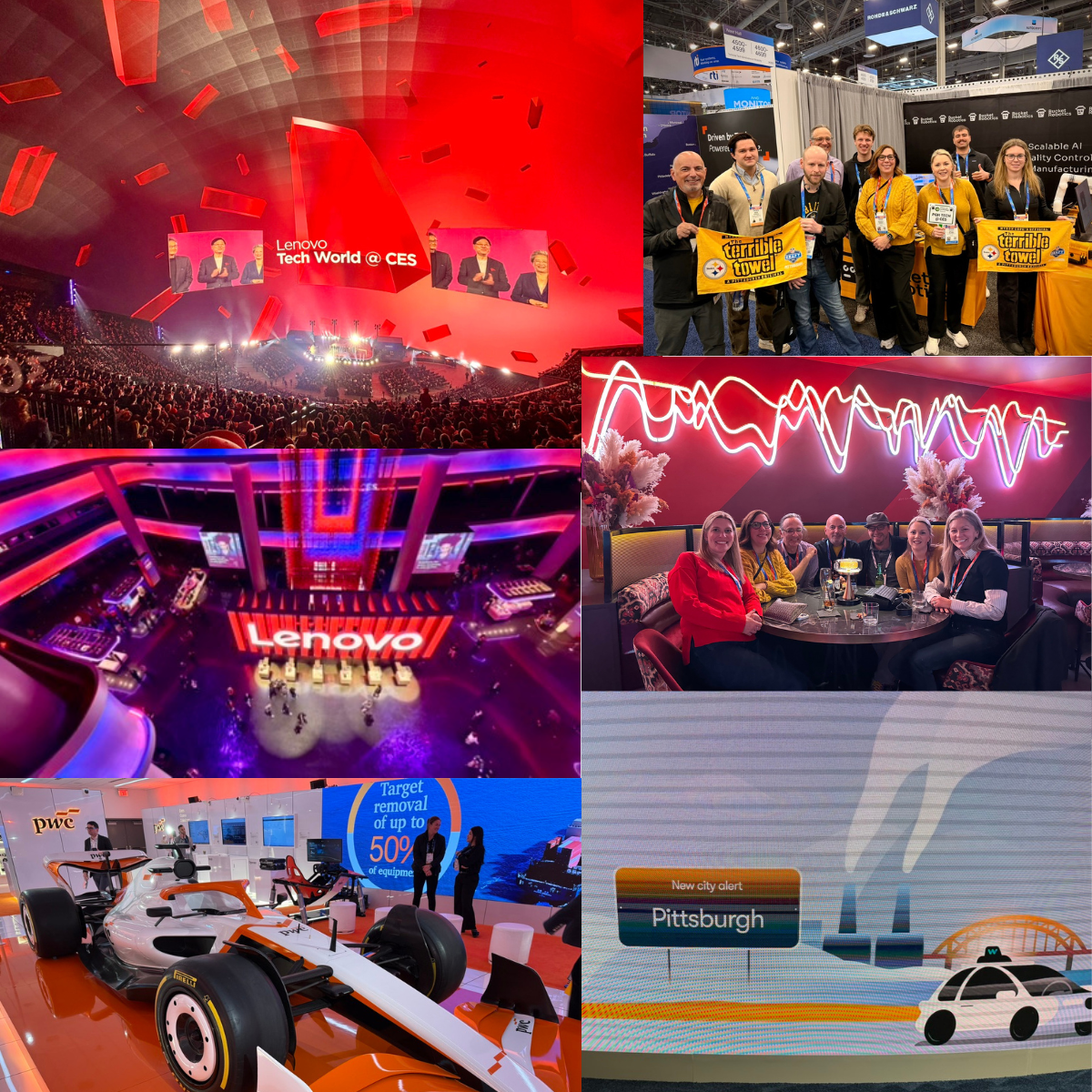
 CES 2026 had its usual sensory overload of glowing screens, whirring robots, and electric vehicles straight out of Tron! And threaded right through that global spectacle was a very Pittsburgh story. Not as a side note. More like a signature neatly stitched into the show floor.
Across my interviews with companies hailing from the Pittsburgh region, a clear narrative emerged: Pittsburgh isn’t showing up to CES with a single “look at us” innovation. It’s showing up as a system. Robotics, materials science, AI, manufacturing, autonomy, power, even capital/professional services, all snapping together like well-engineered parts to make a true Pittsburgh Tech Machine.
At the Powercast booth, Eric Biel was basically bending the laws of expectation. Wireless power traveling through the air, feeding sensors, AI-at-the-edge devices, and entire desktops without batteries or plugs. It felt futuristic, but grounded. Less sci-fi, more “we built this in Pittsburgh and it works.” Powercast’s evolution from “wait, that’s possible?” to “what’s next?” mirrored Pittsburgh’s own trajectory: once underestimated, now quietly essential and in front of the entire tech world.
Pittsburgh Tech @ CES 2026 Part 1
 A few aisles over, Michael Weinert of BMO brought a different kind of energy. Not hardware, but capital. His perspective reframed banking as an invisible but critical layer of the tech stack. From early-stage startups to billion-dollar exits, BMO’s presence underscored that Pittsburgh innovation doesn’t just build cool things. It builds companies that scale, transact, and endure. The message was powerful: world-class tech ecosystems need world-class financial partners, and Pittsburgh has them.
Then there was Covestro, where Karen Guzman made materials science feel downright cinematic. Self-healing BMW car grills. Fully recyclable shoe soles. Plastics reborn from old tires. The big Covestro sign on the Parkway suddenly felt like a teaser trailer for what Pittsburgh materials expertise looks like when it steps onto a global stage. Best of all, these weren’t concept pieces. They were production-ready examples of sustainability, engineering, and design converging in ways most consumers never see but benefit from every day.
On the water (yes, the water!), Pittsburgh showed up in unexpected form. At Brunswick, Jason Arbuckle walked through autonomy not for flashy demos, but for calm. Docking a massive luxury boat without anxiety. Robotics and computer vision from Carnegie Robotics quietly removing stress from real-world experiences. Pittsburgh tech wasn’t trying to impress here. It was trying to help. And that practicality is kind of the point.
Julia Bratinger of Bucket Robotics brought the manufacturing backbone into focus. AI-powered quality inspection that skips years of data collection and actually works on real factory floors. No hype or unnecessary sizzle, just software built by people who understand how manufacturing really breaks. In the middle of flying cars and humanoid robots, Bucket’s story landed hard: Pittsburgh excels at making advanced technology usable where it matters most. Plus, they gave me an amazing bucket hat so I could rep their awesome tech and pull off my best Liam Gallagher impersonation!
Pittsburgh Tech @ CES 2026 Part 2
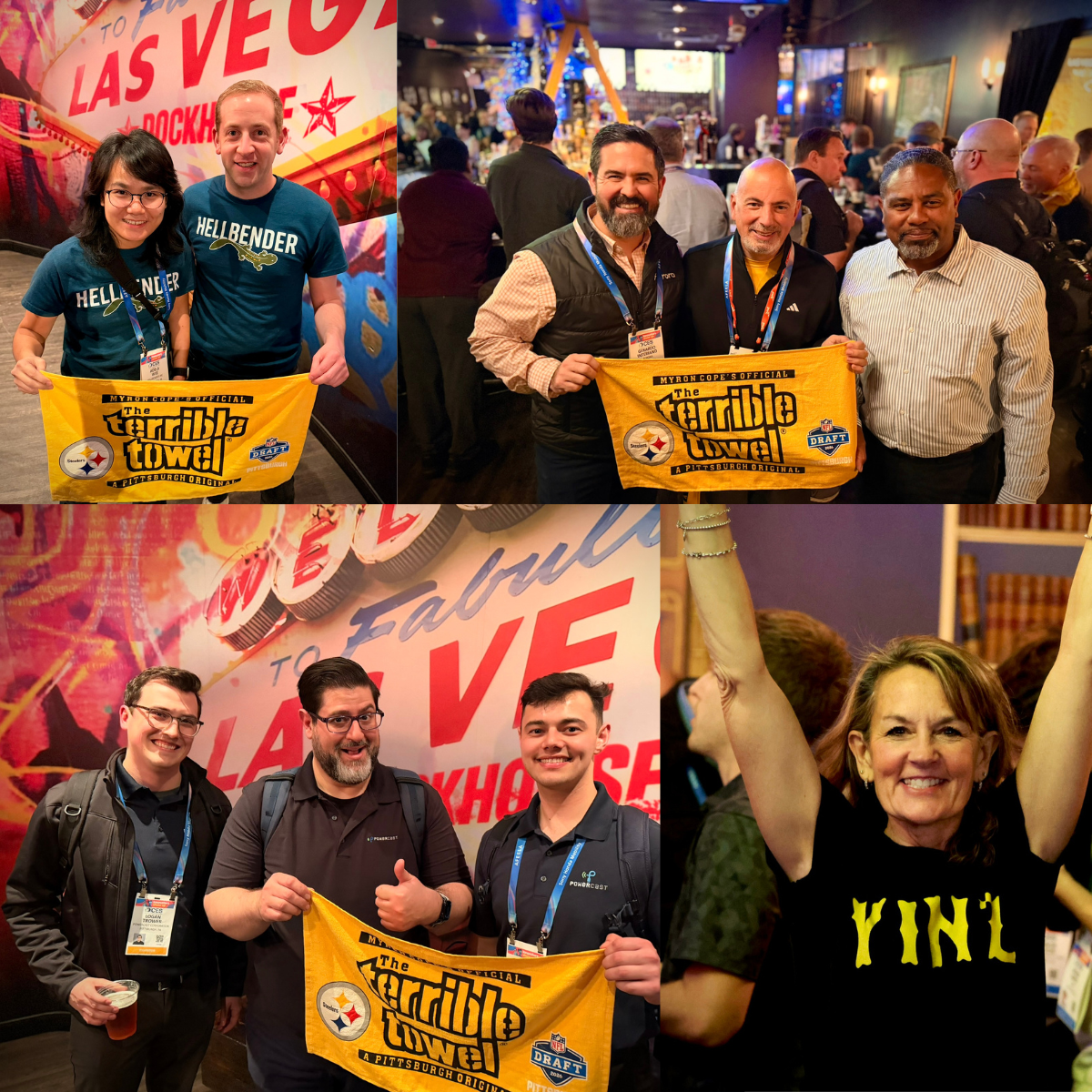 There were so many other companies attending or displaying that I could not get in front of, including Aurora, Civic Science, Butler Technologies...
Taken together, the interviews I did get painted Pittsburgh as something rare at CES: an ecosystem that spans invention to implementation. From RF power and autonomy to advanced materials, AI, robotics, and capital, Pittsburgh showed up not as a single booth or logo, but as connective tissue running through the show.
CES 2026 wasn’t just a place where Pittsburgh companies exhibited. It was a place where Pittsburgh’s tech identity quietly revealed itself: practical, deep, collaborative, and increasingly impossible to ignore as it’s woven into the world’s fabric of tech and innovation.
Photos by John Timney.