Beneath the Need for Speed: Eaton Technology Helps Keep Fighter Jets Flying
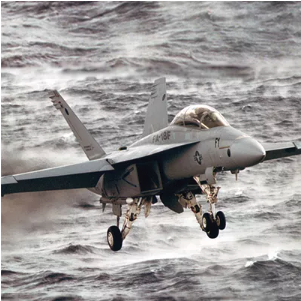 From fuel delivery and hydraulic power to aerial refueling and the more-electric aircraft of the future, Eaton technology performs critical work deep inside some of the world’s most demanding flying machines.
A fighter jet streaking across the sky is an exercise in controlled fury.
Engines roar. Control surfaces move in fractions of a second. Fuel shifts through the aircraft as it climbs, dives, rolls and pulls punishing G-forces. Landing gear must deploy on command. Brakes must respond. Every movement has to happen precisely when the pilot asks for it.
And underneath the aircraft's skin, Eaton technology is helping make it happen.
“From the outside, a modern fighter jet is all sleek lines and aerodynamic precision, but beneath the surface lies a complex system of systems keeping the aircraft mission-ready,” said Jeffrey Skinner, Director of Engineering for Eaton’s Aerospace Group.
Eaton technology can be found throughout military aircraft, including hydraulic and fuel systems as well as the fluid and electrical conveyance systems that connect critical components across the platform.
While these systems may not have the visual drama of afterburners or weapons systems, they are fundamental to controlled and powered flight.
Fuel Flow and Fluid Power
 Consider the difference between a fuel pump and a hydraulic pump.
Fuel pumps and complementary valves and controls move fuel from tanks in the wings and fuselage to the engines, between tanks and, in some missions, overboard during fuel jettison. They must maintain reliable fuel flow through rapid altitude changes, aggressive maneuvers and constantly changing fuel loads to move fuel to where is needed while maintaining the aircraft center of gravity and balance.
Complementary valves and controls also help manage the aircraft’s balance as fuel is consumed, transferred, added or jettisoned.
Hydraulic pumps have a very different mission. They generate the pressurized fluid power that allows the aircraft to move and respond.
That hydraulic power can be used to move flight control surfaces including ailerons, rudders, elevators, flaps and spoilers. It can also power landing gear, brakes, doors and other utility systems.
“Fuel pumps keep the jet engines running by maintaining a steady reliable fuel flow, while the hydraulic pumps enable the aircraft to react and perform by maintaining a steady and reliable hydraulic power,” Skinner explained. “Both systems are necessary for controlled and powered flight.”
On a fighter aircraft, the stakes are particularly high.
During high-speed and combat maneuvers, reduced hydraulic pump performance can translate into slower response times and reduced control authority. Eaton’s pumps must deliver consistent pressure as demand changes rapidly and the aircraft encounters extreme environmental stresses.
“In a fighter aircraft, almost everything depends on timing, precision, and control, placing enormous importance on hydraulic pump reliability and responsiveness,” Skinner said. “During high-speed or combat maneuvers, even milliseconds of response time matter.”
Engineering for the Extreme
Fighter aircraft are among the harshest operating environments imaginable for mechanical systems.
During a single mission, pumps and other components can experience dramatic temperature swings, intense vibration, pressure fluctuations and extreme G-forces. Designing equipment for that environment requires a combination of advanced materials, precision manufacturing, sealing technologies and exhaustive testing.
Eaton engineers design products to resist fatigue, corrosion and wear over extended service lives. Before pumps enter production, they undergo extensive qualification testing, including thermal cycling, vibration, endurance and performance testing under simulated extreme conditions.
“These tests are designed to replicate the harsh realities of combat and ensure that systems continue to operate reliably over time,” Skinner said.
Increasingly, that engineering work begins in the digital world.
Eaton uses model-based design and digital simulations to predict pump and system behavior before parts are manufactured and before physical testing is completed. Engineers can iterate and optimize designs earlier in the development process, helping reduce qualification risks and accelerate development timelines.
That digital approach also feeds into another critical military aviation priority: readiness.
An aircraft sitting in a maintenance hangar is an aircraft unavailable for a mission. Eaton uses decades of field experience, analytical tools and historical performance data to continually improve reliability, reduce maintenance requirements and increase aircraft availability.
“In military aviation, reliability is a mission requirement,” Skinner said. “Aircraft that spend less time under maintenance offer more time in operation and deliver greater strategic value.”
Predictive and condition-based maintenance are becoming increasingly important as aircraft grow more digitally connected. Sensors can monitor system performance and detect early signs of wear or degradation, giving maintenance teams the opportunity to act proactively instead of waiting for a failure.
Extending the Mission
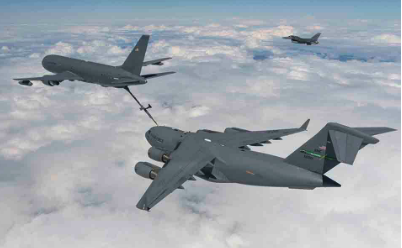 Eaton technology also helps fighter aircraft stay in the fight longer.
The company has deep expertise in aerial refueling systems that support the transfer of fuel between aircraft in flight. That capability allows fighters to remain airborne longer, extend their operational reach and reduce dependence on ground-based refueling infrastructure.
External fuel tanks provide another way to increase range by adding onboard fuel capacity. When that additional fuel is no longer needed, the tanks can be jettisoned, allowing the aircraft to transition from long-range operations to higher-performance maneuvering.
Together, these technologies dramatically change the operational equation.
“It effectively removes traditional range limitations and enables more flexible mission planning,” Skinner said of aerial refueling.
The More-Electric Fighter of the Future
The technology inside tomorrow’s military aircraft will continue to evolve.
For decades, hydraulic systems have been a primary means of delivering the immense power required for aircraft actuation. But military aviation is increasingly moving toward “more-electric” architectures that bring electrical, hydraulic and digital technologies closer together.
In some applications, electric motor-driven pumps are replacing mechanically shaft-driven pumps. Instead of continuously generating hydraulic power, these systems can produce it on demand, potentially improving efficiency and reducing overall energy consumption.
Digitalization adds another layer. Connected systems can provide real-time health monitoring, diagnostics and performance data, opening the door to smarter maintenance and more efficient operation throughout an aircraft’s lifecycle.
“The future of military aviation is increasingly defined by the convergence of electrical, hydraulic, and digital technologies,” Skinner said.
The fighter jet of the future may be more electric, more connected and increasingly intelligent. But it will still depend on something aviation has always demanded: reliable power delivered precisely where it is needed, exactly when it is needed.
That is the hidden engineering beneath the speed, sound and spectacle.
When a fighter jet launches, maneuvers, refuels, extends its range and returns safely to the runway, an extraordinary network of systems is working out of sight.
And in many of those systems, Eaton technology is helping keep the mission moving.