Fireside Chats: Pittsburgh's HEBI Robotics Demystifies Robot Building
Jonathan Kersting
HEBI Robotics has spent more than a decade turning one of robotics’ biggest headaches into a cleaner, faster path to innovation: making it easier to build machines that actually work in the real world. What began with snake robots and lab experimentation has evolved into a Pittsburgh company with a sharp mission, a growing industrial footprint, and technology that is finding its way into everything from refinery inspections to underwater systems to future space applications.

 At the center of HEBI’s story is a deceptively simple idea. As CTO and co-founder Dave Rollinson puts it, the company wants to be “like Lego for robots.” That phrase is sticky for a reason. HEBI’s modular actuators and tools are designed to help engineers and builders move more quickly, reduce reinvention, and get closer to a working system without having to navigate layers of specialized expertise just to make a robot move. “If we do our job right,” Rollinson said, “the things that people build won’t be called robots. They’ll just think of ’em as the next generation of tools.”
That practical streak has defined HEBI from the start. CEO Bob Raida, a Pittsburgh native who joined the company near its inception, said the early insight came when the team realized that while snake robots were fascinating in the lab, the real value was in the tools they had developed to build, repair, modify, and reconfigure them. Those modular building blocks had broader commercial potential. The result was a company built not around one flashy machine, but around the infrastructure that makes many machines easier to create.
For years, HEBI kept the lights on by serving researchers and academics around the world. That market gave the company room to refine its approach, but it also forced a bigger question: where could this technology deliver repeatable value outside the lab? HEBI’s answer has been to lean into real-world use cases, where ruggedness, speed, and flexibility matter as much as elegance. That shift has given the company credibility in industry and helped prove that its modular approach is not just clever, but commercially useful. As Raida put it, the company has made major progress “showing the world that we can create radically innovative systems that get real work done in ways people didn’t think was even possible.”
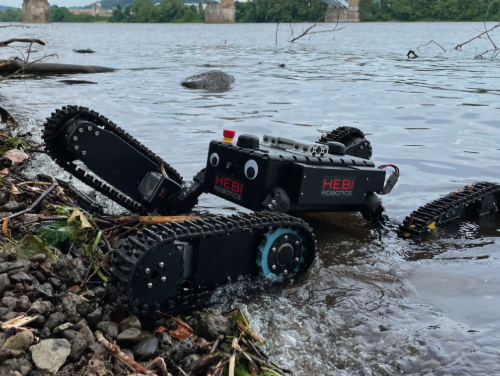 One example came through work tied to Chevron, where HEBI was asked whether one of its robotic arms could automate non-destructive testing and inspection tasks in refineries. That challenge led the company to develop its first IP67-rated actuator, built to withstand wet, dirty industrial environments. In plain English: waterproof, dustproof, and ready for harsher conditions than a tidy lab bench. That same mindset is now pushing HEBI into underwater robotics, with work aimed at taking its sealed systems from shallow depths to much deeper environments, including robotic arms for remotely operated vehicles. Final assembly happens in Pittsburgh, a point of pride and a strategic advantage for a company that depends on rapid iteration.
Space may be the most captivating frontier in HEBI’s orbit. NASA and JPL have long used HEBI systems for prototyping, and the company is now working through the process of adapting its actuators for flight-ready use. The appeal is obvious: when space missions are expensive and one-off, every month of engineering time matters. HEBI’s modular platform can shorten development cycles while preserving confidence in the hardware. “Most of the cost of the actual project is actually people’s time,” Rollinson said. “It’s saving people’s time and still delivering something that you’re extremely confident in will work.”
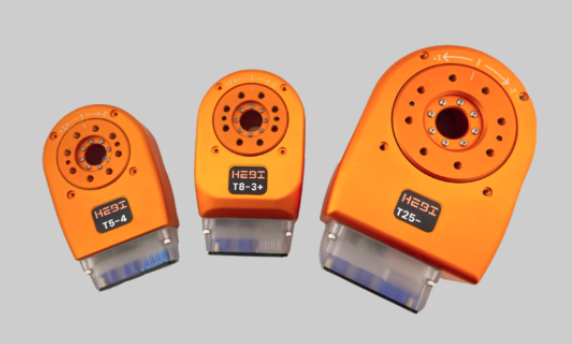 For all its technical sophistication, HEBI does not present itself with robotic sterility. The company is serious about engineering, but not solemn about it. Robots get googly eyes. Swag matters. The culture, Raida said, starts with a clear mission: “to make it easier to build robots.” From there, the company looks for people who are energized by solving problems, taking things apart, making them better, and learning through iteration. “Design, build, iterate” is more than a slogan. It is how HEBI works. “It’s a series of failures that lead up to something that is the right solution,” Raida said.
That blend of rigor and play feels distinctly Pittsburgh. HEBI is not chasing robotics theater. It is building tools for people who need machines to do real jobs in messy places, under pressure, on deadline. In a field full of hype, HEBI’s edge may be that it is trying to demystify robotics rather than glamorize it. The company’s systems are built to help others invent faster, test earlier, and move with more confidence. That is not just a better way to build robots. It may be a better way to build a robotics company.
Like Podcasts?