For Huntington Bank, Technology and Community Go Hand in Hand
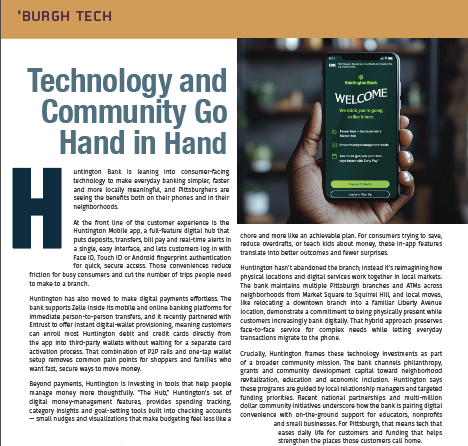 Huntington Bank is leaning into consumer-facing technology to make everyday banking simpler, faster and more locally meaningful, and Pittsburghers are seeing the benefits both on their phones and in their neighborhoods.
At the front line of the customer experience is the Huntington Mobile app, a full-feature digital hub that puts deposits, transfers, bill pay and real-time alerts in a single, easy interface, and lets customers log in with Face ID, Touch ID or Android fingerprint authentication for quick, secure access. Those conveniences reduce friction for busy consumers and cut the number of trips people need to make to a branch.
Huntington has also moved to make digital payments effortless. The bank supports Zelle inside its mobile and online banking platforms for immediate person-to-person transfers, and it recently partnered with Entrust to offer instant digital-wallet provisioning, meaning customers can enroll most Huntington debit and credit cards directly from the app into third-party wallets without waiting for a separate card activation process. That combination of P2P rails and one-tap wallet setup removes common pain points for shoppers and families who want fast, secure ways to move money.
Beyond payments, Huntington is investing in tools that help people manage money more thoughtfully. “The Hub,” Huntington’s set of digital money-management features, provides spending tracking, category insights and goal-setting tools built into checking accounts — small nudges and visualizations that make budgeting feel less like a chore and more like an achievable plan. For consumers trying to save, reduce overdrafts, or teach kids about money, these in-app features translate into better outcomes and fewer surprises.
Huntington hasn’t abandoned the branch; instead it’s reimagining how physical locations and digital services work together in local markets. The bank maintains multiple Pittsburgh branches and ATMs across neighborhoods from Market Square to Squirrel Hill, and local moves, like relocating a downtown branch into a familiar Liberty Avenue location, demonstrate a commitment to being physically present while customers increasingly bank digitally. That hybrid approach preserves face-to-face service for complex needs while letting everyday transactions migrate to the phone.
Crucially, Huntington frames these technology investments as part of a broader community mission. The bank channels philanthropy, grants and community development capital toward neighborhood revitalization, education and economic inclusion. Huntington says these programs are guided by local relationship managers and targeted funding priorities. Recent national partnerships and multi-million dollar community initiatives underscore how the bank is pairing digital convenience with on-the-ground support for educators, nonprofits and small businesses. For Pittsburgh, that means tech that eases daily life for customers and funding that helps strengthen the places those customers call home.
The net effect is a practical one: Huntington’s consumer tech stack — from biometric logins and The Hub to Zelle and instant digital-wallet enrollment — reduces friction and improves financial visibility for users, while the bank’s community programs aim to ensure those gains are shared locally.
For Pittsburgh residents, that combination of convenience and civic investment makes Huntington’s technology feel less like a cold utility and more like a tool being used to look out for the neighborhoods it serves.