Pittsburgh Mayor Corey O’Connor’s Tech Playbook: Speed, Talent, and Growth
By The Pittsburgh Technology Council
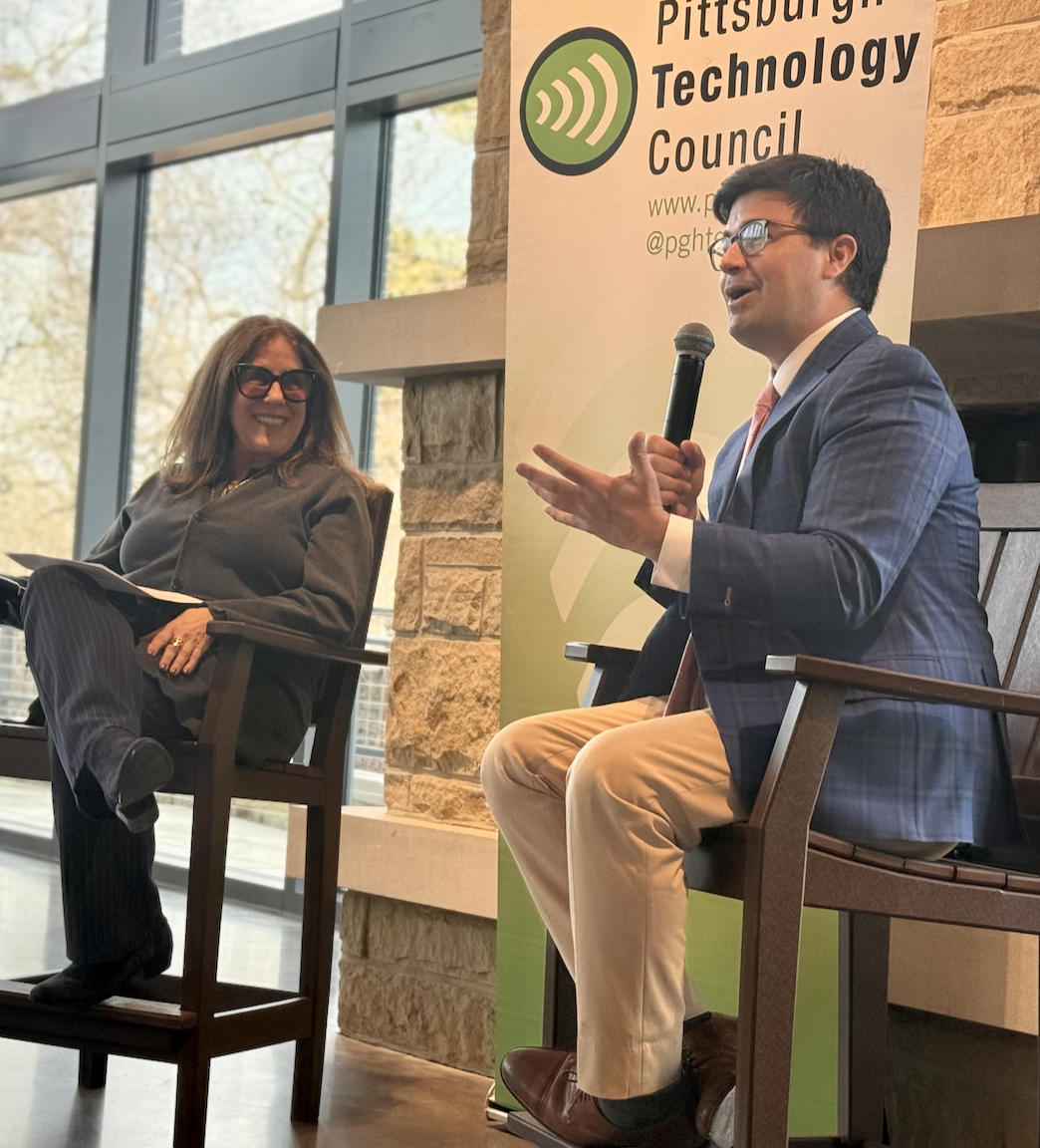 At the Pittsburgh Technology Council's Huntington Bank Breakfast Briefing, Pittsburgh Mayor Corey O'Connor sat down with Tech Council CEO Audrey Russo to sketch out his early vision for the city’s future, with technology, entrepreneurship, and opportunity as recurring headline acts.
From the start, O’Connor framed Pittsburgh’s tech sector as both a competitive advantage and a civic responsibility. He emphasized that the city’s top-tier talent base gives it a natural edge, but only if government moves fast enough to support it. “When you look at every matrix, Pittsburgh is gonna be the top five or the top 10…especially when it comes to talent,” he said, adding that the real work now is making sure companies stay and grow here.
Speeding Up City Hall for Startups
One of O’Connor’s earliest priorities has been reforming Pittsburgh’s permitting system, a frequent pain point for small businesses and developers alike. He noted that while major cities can issue permits in weeks, Pittsburgh has often taken months, discouraging entrepreneurs without deep legal resources. Streamlining that process, he argued, sends a clear signal: the city is “open for business.”
He illustrated the impact with a neighborhood example, describing how his team helped a small kitchen in North Homewood finally secure its permit in time to open before the NFL Draft. “It’s small things like that,” he said, “that actually make you want to open a business in Pittsburgh again.”
Downtown, Details, and Development
Much of the conversation focused on downtown revitalization and the proposed transit reinvestment district, which could generate up to $50 million for development. O’Connor sees the fund as a way to close financing gaps and accelerate projects, especially those supporting startups and small retailers.
But his approach was not only about big numbers. He returned repeatedly to what he called “the details”: removing outdated newspaper kiosks, repainting aging railroad trestles, improving lighting, and reimagining spaces like Mellon Square. “We have forgotten about the details,” he said. “And we are focused on the details.”
At one point, he joked that even painting the trestles in “black and gold, 412 Pittsburgh” could help reshape perceptions, a reminder that civic pride and placemaking go hand in hand.
A Hands-On Approach to Tech Companies
O’Connor described a notably personal strategy for engaging with tech firms: cold-calling business owners, founders and executives simply to say thank you.
“Please, please, please don’t hang up,” he laughed. “It’s not a prank call.”
He recounted one failed attempt, when a restaurant mistook him for a customer placing an order. “They said, ‘That’s great. Call back with your order ready.’” The mayor obliged.
Behind the humor is a serious goal: positioning City Hall as an accessible partner. O’Connor said he wants companies to know that whether they run a pizza shop or a robotics startup, the mayor’s office is invested in their success.
He also highlighted outreach to international partners, including delegations from Europe and Taiwan, as part of a broader effort to connect Pittsburgh’s innovation ecosystem to global markets.
Selling the City, One Tunnel at a Time
Perhaps his most vivid metaphor came when discussing investor recruitment. O’Connor described personally driving visitors from the airport through the Fort Pitt Tunnel, where the skyline suddenly unfolds.
“If we have a 15-minute conversation 'till you get through that tunnel,” he said, “you are now hooked on Pittsburgh.”
For him, being mayor means being the city’s chief salesperson, showcasing not just companies and universities, but the emotional pull of place.
Workforce, Childcare, and Talent Retention
The mayor also connected tech growth to quality-of-life issues, particularly childcare and workforce participation. He discussed investments in early childhood education and new efforts, led in part by his wife, to expand childcare capacity across the city.
Looking ahead, he outlined plans to better utilize recreation centers and schools as hubs for learning, trades exposure, and enrichment. “These spaces sit for no reason,” he said. “Why can’t we bring our resources into our communities?”
Insights from the Q&A: Inclusion, Capital, and Access
During the audience Q&A, O’Connor reinforced his commitment to inclusive growth.
When asked about reviving early-stage investment funds, he expressed interest in supporting small startups that need early capital and renovated space. “Investing early will only generate…jobs,” he said.
Responding to questions about hiring people with disabilities, he emphasized education and advocacy, noting the city’s renewed focus on advisory councils and employer outreach.
On talent retention, he acknowledged the disconnect between available jobs and graduates leaving the region. He pledged to use city tours, social media, and internship programs to spotlight “unsung” local companies.
And when youth workforce advocates raised concerns about rigid credential requirements, O’Connor responded with characteristic bluntness: “Who gives a damn if a kid breaks a window? I’ll fix it,” he said, arguing that young people need space, trust, and opportunity to grow.
A Mayor in Sales Mode
Throughout the conversation, O’Connor blended policy detail with storytelling and humor. He even shared a story about leaving a Harvard Kennedy School event early to watch a Steelers game. “There are priorities in life,” he joked. “We have to make the playoffs.”
The anecdote captured his broader style: rooted in local culture, unpretentious, and unapologetically Pittsburgh.
Looking Forward
In closing, O’Connor urged the region’s tech and business leaders to see City Hall as a partner.
“Utilize our office,” he told the audience. “We’re here to help you grow. We want to hear your story. It only promotes Pittsburgh.”
Taken together, the fireside chat painted a picture of a mayor eager to move quickly, sweat the small stuff, and personally champion the city’s innovators. With a mix of policy reform, phone calls, tunnel tours, and black-and-gold optimism, O’Connor made clear that for Pittsburgh’s tech economy, he intends to be both architect and hype man.