Titan Robotics Gives Fighter-Jet Maintenance a High-Tech Wingman
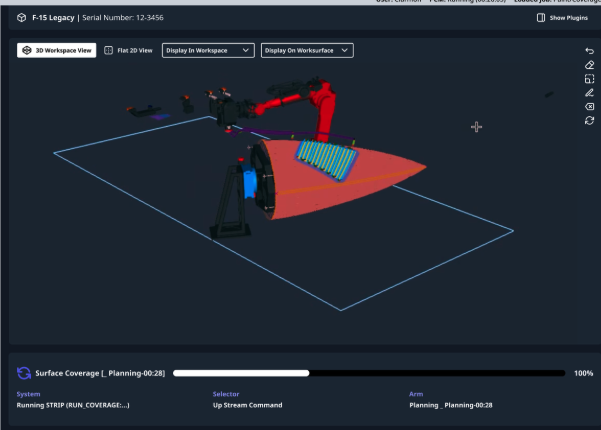 From inspecting F-15s and repairing radomes to deploying cold-spray systems at military bases, Titan Robotics is transforming some of aviation maintenance’s dirtiest, most demanding jobs. Now the Pittsburgh company is preparing its technology for an even broader commercial mission.
Keeping a fighter jet in the air requires far more than high-performance engines, advanced weapons and a skilled pilot.
Behind every mission stands an army of maintainers tasked with stripping coatings, sanding composite surfaces, inspecting aircraft for tiny cracks and rebuilding worn components to exacting tolerances. Much of that work remains physically punishing, highly repetitive and difficult to staff.
Titan Robotics is giving those maintainers a powerful new tool.
The Pittsburgh-based company develops intelligent robotic systems that perform surface preparation, inspection and repair work on military aircraft and components. Its roots stretch back to Carnegie Mellon University, where the U.S. Air Force approached researchers with a formidable question: Could they place high-powered lasers on robotic systems to remove paint from aircraft?
That early laser-depainting work ultimately helped launch Titan. Over time, the company’s capabilities expanded well beyond lasers to include robotic sanding, grinding, cold spray, composite repair and nondestructive inspection.
“We view our robots as a tool,” said Titan CFO Thad Magyar, who has been with the company for more than a decade. “Instead of using the hand sander, you’re using our system as the tool.”
Complex Robotics Made Simple
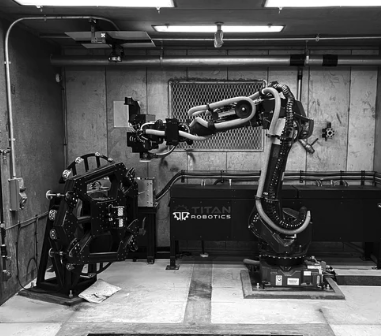 Titan’s secret sauce is not merely building sophisticated robots. It is making them usable by the people already doing the work.
Operators do not need to become robotics programmers. Through touchscreen interfaces, they can identify an area of a component that requires attention. Titan’s software then handles the path planning, positioning and process control.
The systems can also follow predefined “recipes” developed with supervisors and subject-matter experts. Cameras, LiDAR and other sensors monitor a surface and tell the robot when it has reached the desired condition.
When sanding a radome, for example, the robot can distinguish between layers of topcoat and primer. Once the correct surface condition appears, it moves to the next area rather than continuing to remove material.
That consistency matters. A human operator may tilt a sanding disc to remove material faster, potentially gouging a surface or creating an uneven finish. A robot maintains controlled pressure and follows a repeatable path.
The result is fewer defects, less rework and a reduced chance of damaging an expensive aircraft component.
Titan has also demonstrated that its systems can fit naturally into an existing workforce. Magyar recalled deploying radome-repair robots inside a union shop, where floor personnel learned to operate the equipment in roughly an afternoon.
Once employees saw that the robots could spare them from entering hot work cells wearing respirators and full protective suits, acceptance came quickly.
“Once that happened, all the other guys wanted their robots,” Magyar said. “They were like, ‘Where’s my robot?’”
More Aircraft Moving Through Maintenance
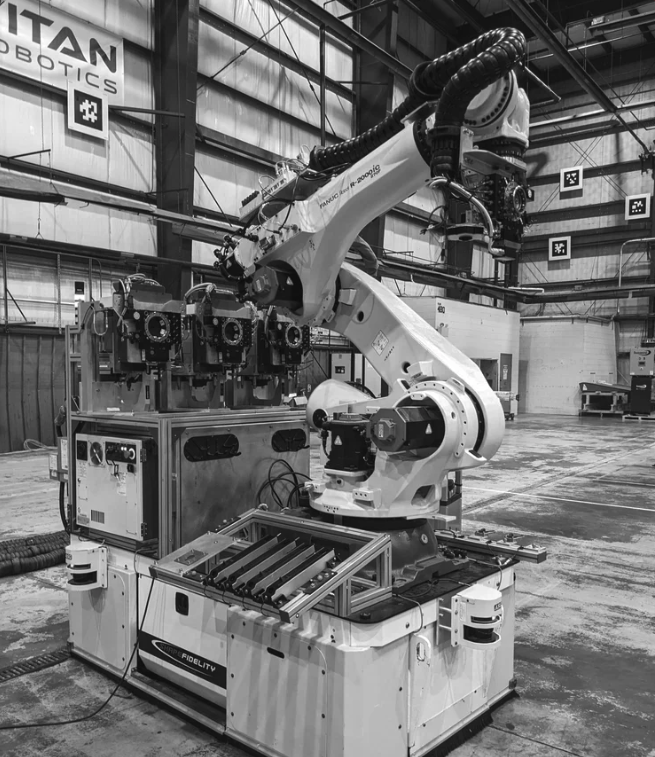 Titan’s technology is designed to augment maintainers rather than sideline them.
While a robot sands one radome, operators can prepare the next. When the first process finishes, the completed part comes out and another is ready to go in. At one facility, three Titan radome systems operate next to each other across two shifts.
This ability to work in parallel increases throughput at a time when the military faces a shortage of skilled maintainers and an aging workforce.
Many aircraft-maintenance jobs fall squarely into what the industry calls the “three Ds”: dull, dirty and dangerous. Younger workers may enter those roles but leave as soon as another opportunity appears. Meanwhile, aircraft and vehicles can begin stacking up as they wait for limited personnel, equipment or shop capacity.
Automation helps break that bottleneck.
From Tap Tests to 3D Inspection
Titan is also bringing greater precision to aircraft inspection and composite repair.
Radomes, the aerodynamic coverings protecting radar equipment in an aircraft’s nose, must meet demanding specifications. Traditionally, experienced inspectors could perform a “tap test,” striking the surface with a coin and listening for subtle changes in sound that might indicate a defect.
Titan’s systems replace that subjective process with sensors, automated measurement and digital mapping.
A robot can inspect a radome, identify areas outside specification, change tools, mill out damaged sections and sand repaired material back to the correct profile. A 3D projection then displays the results directly on the rotating radome: green indicates an acceptable surface, while other colors flag areas that remain too high or too low.
Titan is applying similar inspection capabilities to full aircraft. The company maintains an F-15 at its facility to test large mobile and gantry-based inspection systems that look for metal fatigue, cracks and other emerging problems.
Finding damage early can allow crews to complete a smaller repair before the aircraft requires extensive refurbishment and months of downtime.
Repairing Parts in the Field
Cold spray represents another fast-growing area for Titan.
Despite its name, cold spray is not truly cold. It operates at lower temperatures than many other thermal processes and deposits material onto worn or corroded parts, rebuilding their surfaces rather than replacing them.
Titan has cold-spray systems scheduled for deployment to five military bases, bringing repair capability closer to the aircraft.
For qualifying components, maintainers can restore a worn part in the field instead of shipping it to a depot for heavy maintenance. That means less transportation, shorter delays and more aircraft available for service.
Titan is also expanding its Agile Robotics Ecosystem, or ARES, which coordinates mobile robots, rail-mounted systems and collaborative robots. Some current projects place robots alongside people in unstructured environments, using increasingly capable sensors to recognize workers, equipment and changing conditions on the shop floor.
Cleared for Commercial Takeoff
Although defense work helped forge Titan’s technology, Magyar sees a significant opportunity beyond military aviation.
The same labor shortages, safety concerns and quality requirements found in aircraft maintenance run through commercial manufacturing. Titan is already moving its robotic grinding systems into metal foundries and other facilities producing castings, industrial parts and large components.
These environments often depend on demanding manual grinding and finishing processes. Titan’s technology can give manufacturers a way to improve consistency, protect employees and expand production without requiring every operator to become a robotics expert.
The company ultimately hopes to work alongside major industrial brands and technology suppliers as its commercial footprint grows.
That expansion is a natural progression for technology first tested in one of the world’s most demanding environments. If a robotic system can inspect fighter aircraft, repair radar components and restore worn parts at military bases, it can bring plenty of horsepower to America’s foundries and factories.
Titan’s next mission is already on the runway.