Touchstone Advanced Composites' Bold Aerospace Expansion
 When most people think about coal, they think about energy. At Touchstone Advanced Composites in Triadelphia, West Virginia, that story is being rewritten with a decidedly higher-altitude ending.
Here, pulverized coal sourced from West Virginia is converted into C-Foam, a high-performance rigid carbon foam, then used to create precision aerospace tooling, and now, thanks to a newly expanded clean room, turned into composite aircraft parts and full aerospace assemblies. It is a manufacturing chain that feels almost improbable until you see it laid out plainly: West Virginia coal goes in one side of the building, and advanced aerospace components come out the other.
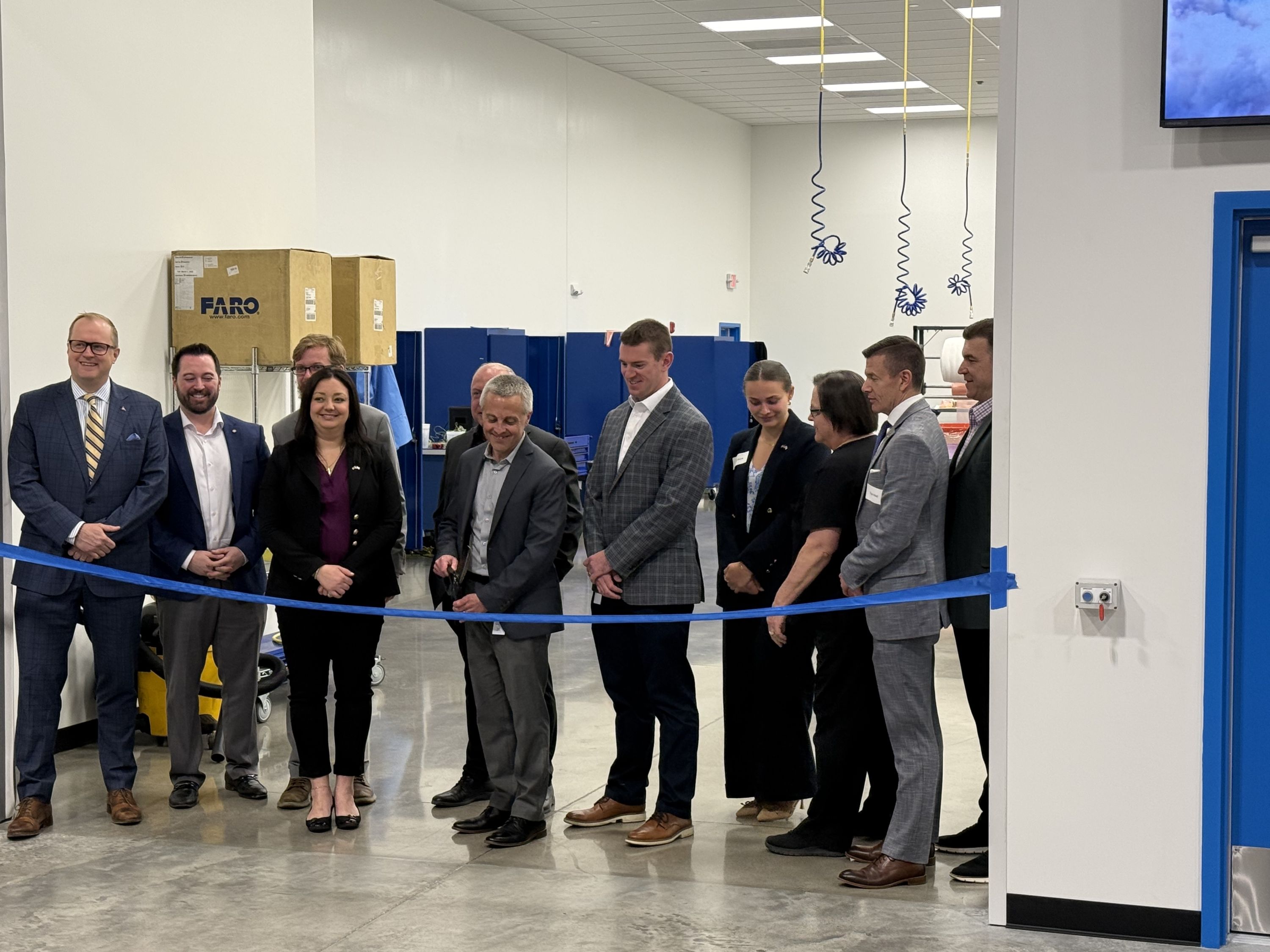
That vision was front and center at the ribbon cutting for Touchstone’s latest expansion, where Dan Connell, Senior Vice President of Innovations for Core Natural Resources and president of its Innovations and Touchstone Advanced Composites subsidiaries, framed the moment as something bigger than a facility upgrade.
“This is not, in my mind, just manufacturing, it’s transformation,” Connell said. “It’s a powerful example of how we can take traditional resource and apply innovation, technology, and expertise to create entirely new high value applications.”
That transformation is taking place at a time when Touchstone is gaining momentum inside some of the most sophisticated corners of the aerospace and defense world. According to Connell, the company serves more than 40 customers and has contributed to programs including the F/A-18, F-35, B-21, and NASA initiatives such as the X-59 Quesst and the Advanced Composite Solar Sail.
The expansion itself is substantial. Connell said it increases the Triadelphia facility’s footprint by approximately 30 percent and triples its clean room space, giving Touchstone the room it needs to respond to growing customer demand and scale its next phase of growth.
That growth is not just about machinery and square footage. It is also about jobs.
Touchstone currently employs about 50 people at the facility, including engineers, technicians, skilled operators, and manufacturing staff. Connell said the company expects that number to more than double over the next three years, pushing employment north of 100 as the business expands.
For the Ohio Valley, that matters. A lot.
It means local families will have access to more advanced manufacturing careers. It means more investment flowing into the community. And it offers a tangible example of how legacy industries can evolve into new engines of economic growth without severing themselves from the region’s industrial roots.
 Touchstone’s own roots run back to 2013, when founder Brian Joseph launched the company as part of Touchstone Research Laboratories. In 2023, Touchstone Advanced Composites was acquired by Consol Energy, which later merged with Arch Resources to form Core Natural Resources, now one of the largest coal companies in the United States. Connell noted that Core operates 11 mines across four states, including five in West Virginia, giving the company both the resources and the opportunity to think differently about how coal can create value beyond its traditional uses.
That is where the story becomes especially compelling.
For decades, coal has been discussed in terms of what it powers. At Touchstone, it is being discussed in terms of what it can become. In this case, a domestically sourced advanced material that supports aerospace production, defense supply chains, and next-generation industrial capability. Connell described that as central to the mission of Core’s Innovations Group, which is focused on developing new applications for domestic resources across areas including advanced materials, battery technologies, and critical minerals.
In other words, this is not nostalgia wearing safety glasses. It is a strategic effort to move regional resources further up the value chain.
And there is something elegantly bold about the image Connell painted. Not just coal becoming C-Foam, but coal from West Virginia helping shape the molds, parts, and assemblies used in some of the most advanced aircraft and defense systems in the world. It is old economy raw material meeting new economy precision, with a clean room in the middle and a runway on the horizon.
For a region that knows how to make things, Touchstone’s expansion offers a sharp reminder: the future of manufacturing may not arrive by replacing the past entirely. Sometimes it comes from reengineering it.