Cook Myosite: Developing Muscle Cell Therapies So the Body Can Heal Itself
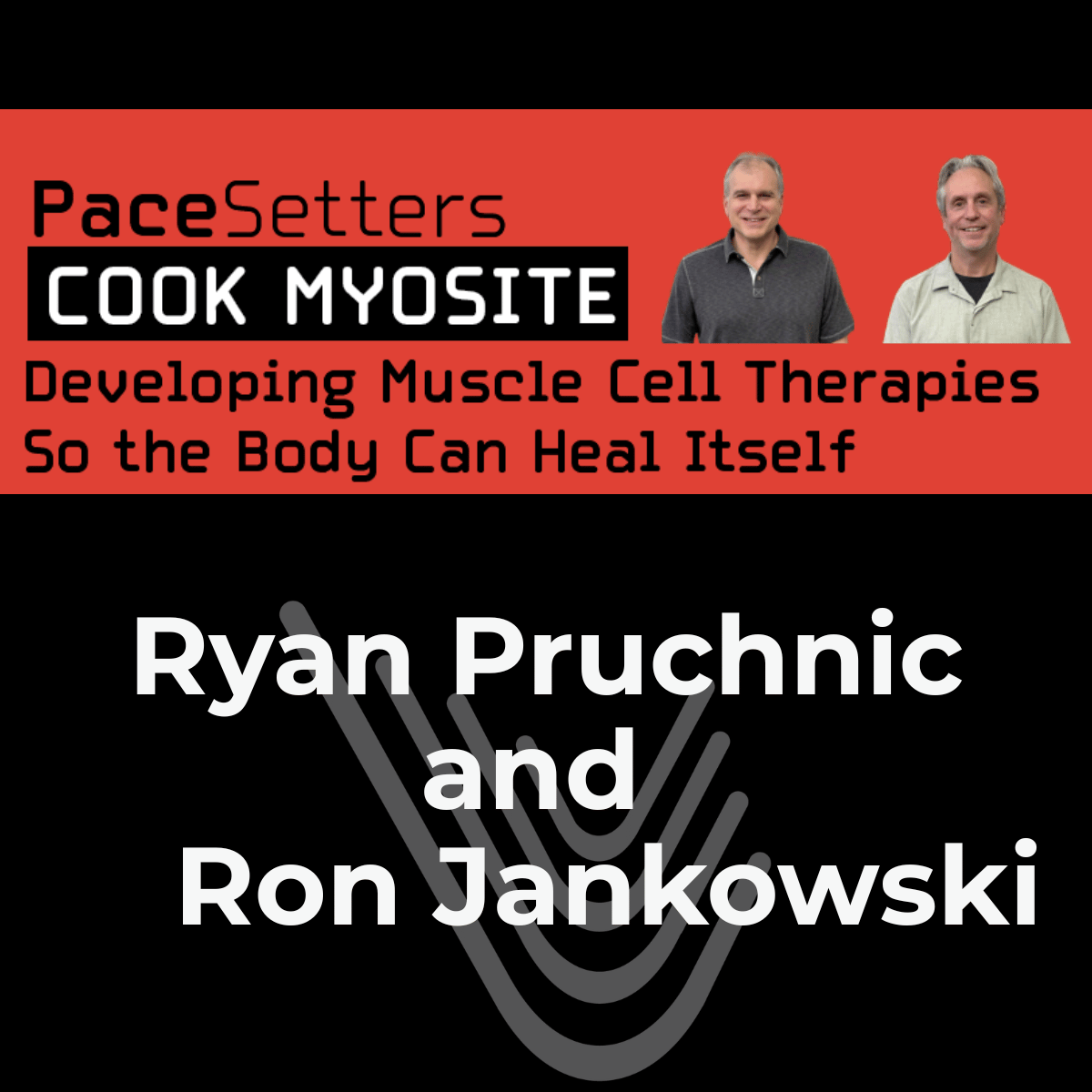 For nearly a quarter century, Cook MyoSite has been working toward a deceptively simple idea: what if the body could be given a little help healing itself?
 Simple to explain. Monumentally difficult to execute.
Since 2002, the Pittsburgh-based company has been developing personalized muscle cell therapies designed to restore function in muscles that have become weakened or damaged. Along the way, Cook MyoSite has had to help write the playbook for an entirely new area of medicine, building the science, manufacturing capabilities, regulatory expertise and clinical evidence necessary to move regenerative medicine closer to everyday patient care.
For Managing Vice President Ryan Pruchnic and Vice President of Regulatory and Scientific Affairs Ron Jankowski, that journey has consumed much of their professional lives.
The two have worked together since 1998. Both are University of Pittsburgh graduates. Jankowski was born and raised in Pittsburgh, while Pruchnic came to the region from Johnstown for college and began his career doing cancer research before moving into the emerging world of cell therapy.
What they have built together is rooted in an elegant concept.
What they have built together is rooted in an elegant concept.
Nearly 24 years later, that willingness to keep solving the next problem has brought Cook MyoSite remarkably close to turning an ambitious scientific idea into something that could someday become routine medical care.
Cook MyoSite trains physicians participating in its clinical trials to remove a small muscle sample from a patient’s leg. The sample is brought to the company’s Pittsburgh facilities, where specialized processes allow the muscle cells to grow outside the body under tightly controlled conditions that mimic their natural environment.
“We started with the idea of using the body to heal itself,” Pruchnic explained.
“We started with the idea of using the body to heal itself,” Pruchnic explained.
The cells are expanded to much greater numbers than the body could naturally produce on its own. Before being returned to the physician, they undergo extensive quality testing to make sure they are what they are supposed to be and behave the way they are expected to behave. The cells can then be injected into a different muscle that needs reinforcement.
In effect, Cook MyoSite is giving biology a head start.
Cook MyoSite is not pursuing conditions simply because they represent interesting scientific problems. Its approach has been shaped by areas of significant unmet medical need, particularly in women’s health, where Jankowski noted that research and treatment options have historically been limited. That philosophy also reflects the culture of Cook Group, the company’s parent organization.
Jankowski said Cook’s origins in medical devices were driven by identifying needs that were not being adequately addressed and then finding ways to solve them. Cook MyoSite brought that same mentality into regenerative medicine.
“You combine the science, the unmet need, and merge those two together,” he said. “That’s how we got into the field that we’re heading towards.”
The company is studying its muscle cell platform for fecal incontinence in women who suffered an obstetric injury, such as an episiotomy or perennial tear, and swallowing disorders, conditions where relatively small muscles can have an outsized impact on a person’s ability to live normally.
Those impacts extend well beyond the physical symptoms.
Pruchnic and Jankowski stressed that incontinence and swallowing disorders can affect social interaction, family relationships, sexuality, mental health and whether someone feels comfortable participating in ordinary day-to-day activities.
The seriousness of those conditions has even been recognized by the U.S. Food and Drug Administration. Cook MyoSite has successfully gained regulatory designations acknowledging the serious unmet need associated with some of the conditions it is targeting. For the team, that recognition was validating. Yet getting to this point has required extraordinary patience.
For roughly the first five years, the operation consisted of four employees and an intern, supported by the broader Cook organization. Everyone wore multiple hats.
Pruchnic joked that at various times he handled human resources, information technology, laboratory testing and even cleaning duties. More importantly, nearly everything they encountered required an experiment.
Pruchnic joked that at various times he handled human resources, information technology, laboratory testing and even cleaning duties. More importantly, nearly everything they encountered required an experiment.
How should cells be shipped? Test it. How should patient samples be collected? Test it. How should materials be handled safely if the resulting product would eventually be placed into a human being? Test it again.
The regulatory environment was evolving almost as quickly as the technology. When Cook MyoSite began, many of the rules governing modern cell therapies had not yet been written. The company often had to interpret pharmaceutical regulations and adapt them to a therapeutic model that regulators and developers were still learning to understand.
At the same time Cook MyoSite was developing its science, it was building the organization required to manufacture a highly specialized biological product.
At the same time Cook MyoSite was developing its science, it was building the organization required to manufacture a highly specialized biological product.
That meant creating clean rooms, developing processes, establishing quality systems and constructing facilities capable of producing cells safely and consistently.
The company is now operating from its third facility in Pittsburgh as it prepares for what it hopes will be its next stage of growth. “There are no shortcuts,” Jankowski said.
That philosophy helps explain why the timeline has stretched across decades.
The company is now operating from its third facility in Pittsburgh as it prepares for what it hopes will be its next stage of growth. “There are no shortcuts,” Jankowski said.
That philosophy helps explain why the timeline has stretched across decades.
Clinical trials involving personalized cell therapies take time to recruit. Patients must be treated and then followed for years. Researchers analyze the results, adjust the study design and begin another cycle.
Cook MyoSite has moved through studies examining safety, dosage and patient selection, gradually learning not only who may benefit from its therapy but equally importantly, who may not.
Today, the company has reached late-phase clinical studies for its lead indications and is collecting the data it hopes will support future conversations with the FDA about the path forward. At the same time, the expertise Cook MyoSite has accumulated is becoming an asset far beyond its own clinical programs. The company’s broader mission is to make regenerative medicine part of everyday medicine, discussed alongside pharmaceuticals, surgery or physical therapy rather than treated as something exotic.
To help move the entire field forward, Cook MyoSite is making some of its capabilities available to other companies through its Custom Cell Solutions division. Its experience can help drug developers gain access to difficult-to-source cells and specialized support, allowing those companies to focus more directly on their own science.
Cook MyoSite trains physicians participating in its clinical trials to remove a small muscle sample from a patient’s leg. The sample is brought to the company’s Pittsburgh facilities, where specialized processes allow the muscle cells to grow outside the body under tightly controlled conditions that mimic their natural environment. “We started with the idea of using the body to heal itself,” Pruchnic explained
“We want other technologies to get there,” Pruchnic said.
That may ultimately be one of Cook MyoSite’s most significant contributions: not simply developing one therapy, but helping create an ecosystem around regenerative medicine.
And the company has chosen to build that ecosystem in Pittsburgh. Pruchnic and Jankowski point to the region’s universities, scientific talent and deep bench of problem-solvers as key advantages. Cook MyoSite did not need employees who could simply follow an established cell-therapy playbook because, when the company started, that playbook largely did not exist. They needed people willing to figure things out. Pittsburgh supplied them.
Nearly 24 years later, that willingness to keep solving the next problem has brought Cook MyoSite remarkably close to turning an ambitious scientific idea into something that could someday become routine medical care.
Pittsburgh has a long history of medical firsts. Cook MyoSite is quietly working toward adding another chapter.
Cell by cell. “We have this. We sort of know where we’re going. We need you to think through, help us get there,” Pruchnic said of the challenge of building the company.
Nearly 24 years later, that willingness to keep solving the next problem has brought Cook MyoSite remarkably close to turning an ambitious scientific idea into something that could someday become routine medical care.
Cell by cell. “We have this. We sort of know where we’re going. We need you to think through, help us get there,” Pruchnic said of the challenge of building the company.
Nearly 24 years later, that willingness to keep solving the next problem has brought Cook MyoSite remarkably close to turning an ambitious scientific idea into something that could someday become routine medical care.
Pittsburgh has a long history of medical firsts. Cook MyoSite is quietly working toward adding another chapter. Cell by cell.