Daedalus: 50 Years of Industrial Design in Pittsburgh
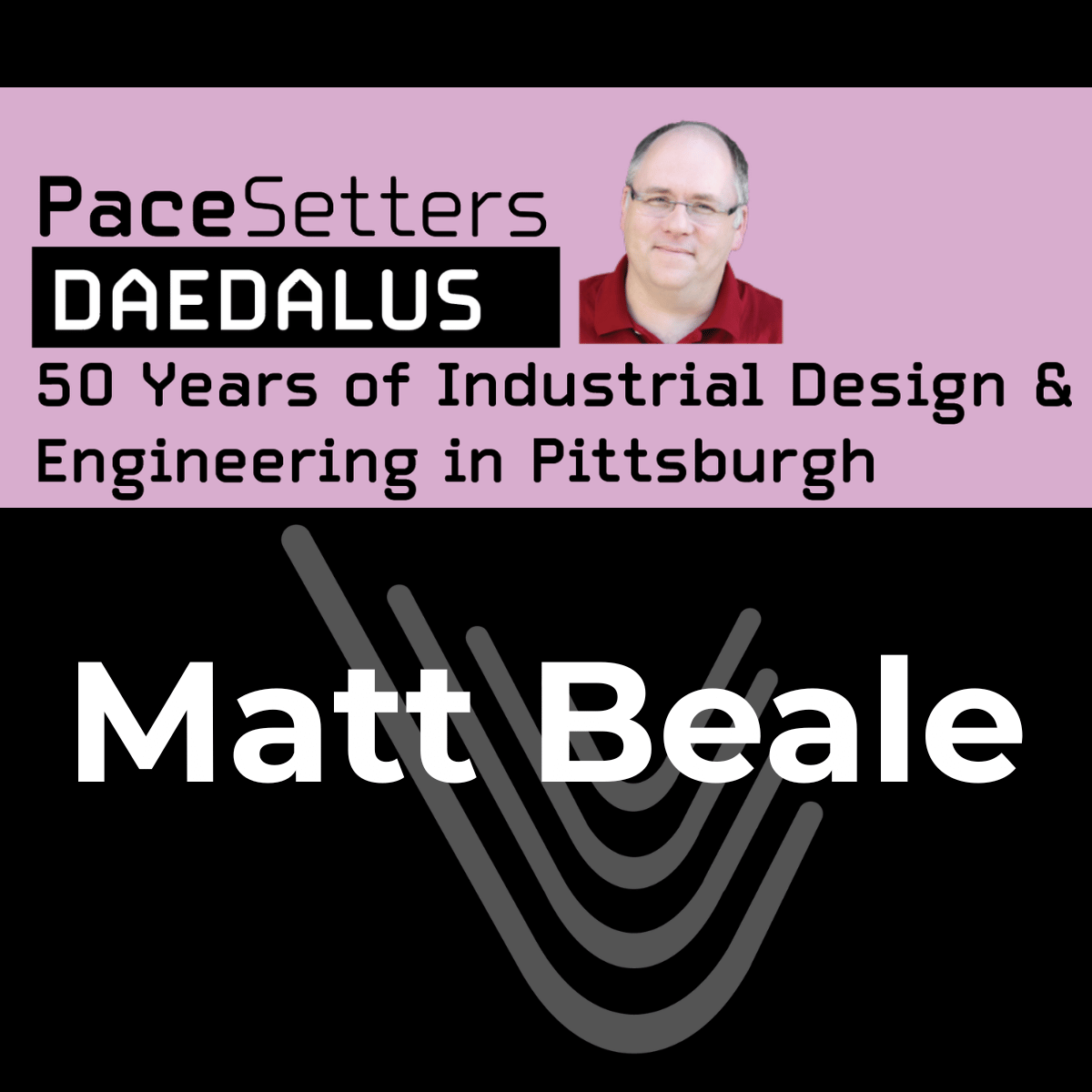 There is a building on Centre Avenue where, for nearly half a century, a team of designers and engineers has been quietly shaping the products that define Pittsburgh's technology story. You won't find their name on a billboard. But if you've been treated in an emergency room, if a loved one has undergone dialysis, if you've taken medication from an automated pharmacy cabinet — there's a decent chance Daedalus touched your life.
"We were the first industrial design firm that Medrad worked with," says Matt Beale, who joined the firm in 1988. Medrad is now Bayer Imaging — one of many companies that has changed names and owners over the years while keeping Daedalus on speed dial. "They're still a client," Beale says, with the kind of understated pride that comes from relationships measured in decades.
Founded in 1979 by Tim Cunningham, a Carnegie Mellon teacher with Westinghouse roots, Daedalus grew alongside Pittsburgh's emerging healthcare and safety sectors. The firm designed the lockable nursing cabinets with touch-screen computers still recognizable in hospitals today. It built the pill-sorting robots that helped launch Automated Healthcare — now Omnicell — and caught the attention of McKesson. "We're working with them every week," Beale says.
Ask him what makes Daedalus work, and he returns to one idea: knowing the edge of your capability. "What is the edge of my firm's capability, and what's on the other side of that edge?" Daedalus doesn't do regulatory or marketing. It does ethnographic research, human factors, mechanical and electrical engineering, software, and industrial design. When a client needs something beyond that perimeter, Beale sends them elsewhere — sometimes to a university lab, sometimes another firm. That honesty has made Daedalus the kind of partner companies don't let go of.
Some of its most consequential work sits at the intersection of engineering and biology. Daedalus developed a pump for a dialysis machine that moves blood gently enough to keep cells alive — work informed by simulations out of Carnegie Mellon. When Nintendo's Wii made motion sensors cheap, Daedalus started dropping them into products before fully knowing what they'd do. "They would cost nickels," Beale says. "You can take that risk." Safety compliance turned out to be a rich field for the technology.
Over time, Daedalus evolved from a pure design shop into a full-service engineering firm — today, more engineers than designers. The firm works with startups from Robotics Factory and Alpha Lab Health, midsize companies, and giants like Industrial Scientific. AI and machine learning are now woven into how the team solves problems, all while protecting client confidentiality.
As Daedalus nears 50, Beale spends less time absorbed in individual projects and more on the firm's trajectory. Both he and the founder taught at Carnegie Mellon, giving them a front-row seat to product development — and sometimes a head start. "We were more multidisciplinary than a lot of the teams when I was first teaching," he says.
What keeps him going after nearly four decades? "It's never the same day twice."
For a firm that has spent 50 years quietly designing the products that keep people alive, that may be the most radical statement of all.