Lovelace: Building AI to Solve the World’s Toughest Problems
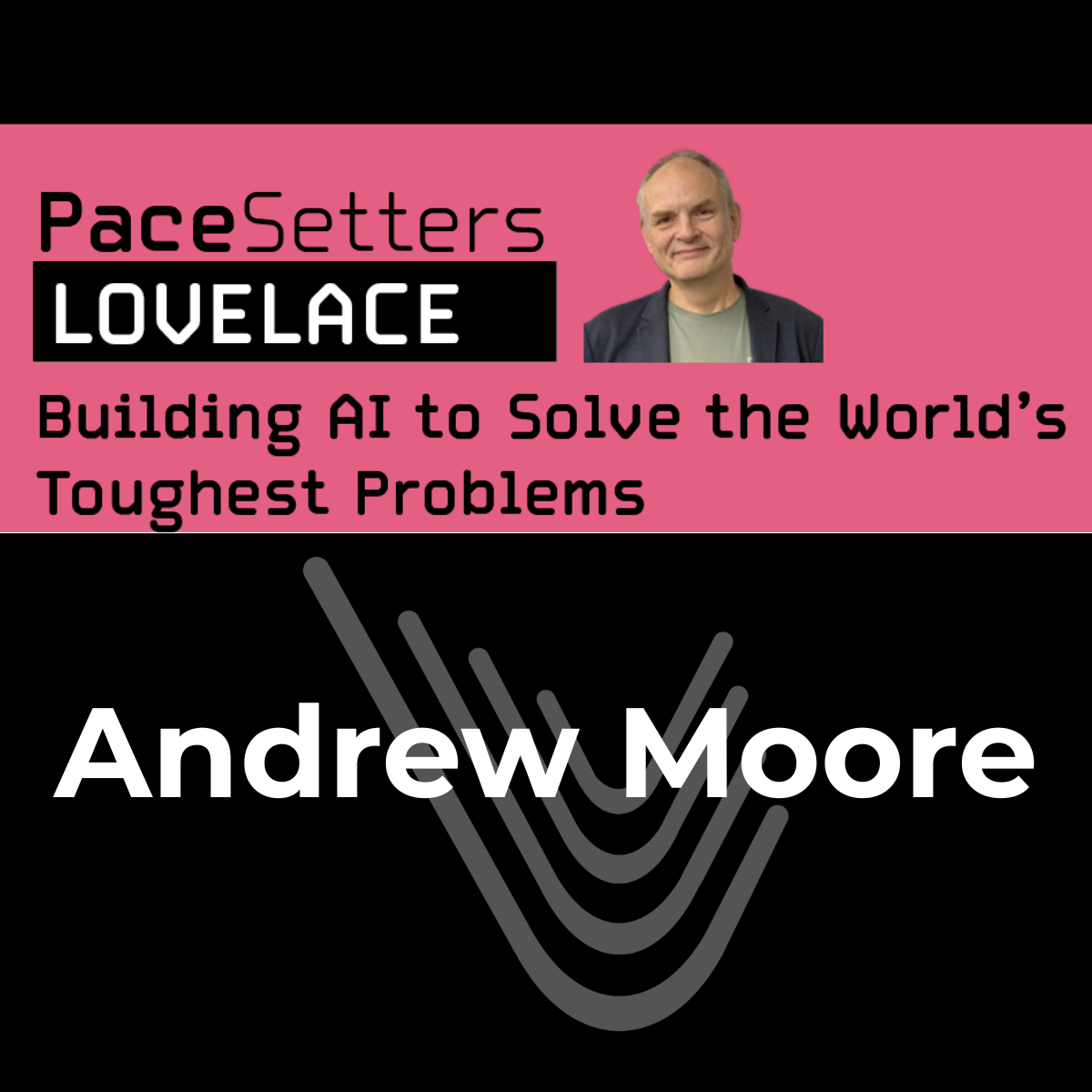 Andrew Moore has spent his career at the forefront of artificial intelligence, long before AI became the hottest topic in technology. From helping establish Google’s engineering presence in Pittsburgh to leading research initiatives at Carnegie Mellon University and serving in national security roles, Moore has seen nearly every chapter of AI’s evolution. Now, as founder and CEO of Lovelace, he’s focused on a challenge that could redefine how organizations use artificial intelligence to solve their most complex problems.
Named after Ada Lovelace, widely regarded as the world’s first computer programmer, the company embraces the same spirit of practical innovation as its namesake. While today’s large language models excel at answering straightforward questions, Lovelace is designed for something far more demanding: investigations that require AI to connect enormous amounts of information before reaching a conclusion.
“Our AIs answer questions that are more like investigations where you’ve got to bring huge amounts of evidence together to make a decision,” Moore explained.
That capability has applications across industries where lives, finances or national security may depend on finding hidden relationships buried within oceans of data. Financial institutions investigating fraud, logistics organizations monitoring supply chains and defense agencies analyzing intelligence all face the same challenge: there is simply too much information for humans, or even conventional AI, to process efficiently.
Lovelace tackles that problem through what Moore calls a “context engine,” a layer that sits between an AI agent and massive data repositories. Rather than forcing an AI model to sift through billions of data points, the context engine rapidly identifies the most relevant information, dramatically reducing the computational burden while improving the quality of the results.
That architectural breakthrough produced an unexpected discovery.
While benchmarking its technology against some of the industry’s leading AI systems, Lovelace found it could deliver comparable analytical quality while using only a fraction of the computational resources.
“We accidentally figured out a way to make AI go 100 times faster,” Moore said, recalling the excitement inside the company’s offices when the team realized what they had built.
The implications extend well beyond speed.
Fewer computational resources mean dramatically lower operating costs and significantly reduced energy consumption. Moore noted that some analytical workloads requiring dollars of cloud compute can now be performed for pennies, opening new possibilities for running sophisticated AI closer to where decisions need to be made, whether that’s in financial institutions, emergency response operations or military environments.
Despite its breakthrough technology, Lovelace remains intentionally lean. The company operates with roughly 20 engineers and scientists, a stark contrast to the thousands Moore previously managed during his career.
Rather than viewing that as a limitation, he sees it as proof that exceptional talent can outperform sheer scale.
Those engineers are also one reason Lovelace has planted deep roots in Pittsburgh.
“It’s not just that there’s really good talent,” Moore said. “There’s an attitude of we’re going to build stuff that works.”
He expanded on that philosophy with a quote that perfectly captures Pittsburgh’s engineering identity.
“You go to the Bay Area if you want to build something that makes a big splash, and you come to Pittsburgh if you want to build something that works.”
Moore believes that culture, combined with generations of systems engineers from companies like Fore Systems and Transarc and the research strength of Carnegie Mellon University and the University of Pittsburgh, creates an unusually powerful environment for solving difficult technical problems. Infrastructure experts and AI researchers don’t work in silos. They collaborate, combining mathematical insight with practical engineering to build systems capable of handling millions or even billions of events per second.
Looking ahead, Moore sees AI’s greatest potential not in replacing people but in empowering them.
Whether coordinating disaster response during major floods, helping investigators uncover financial crime or supporting military personnel with better intelligence, his vision centers on giving human decision makers the context they need to make better choices faster.
“I want to showcase where AI is unambiguously useful,” Moore said. “This is good. I’m glad we got this.”
For a company that spent years quietly developing its technology before emerging from stealth mode, Lovelace represents something distinctly Pittsburgh: ambitious science wrapped in practical engineering. It’s another reminder that some of the world’s most important AI breakthroughs aren’t necessarily coming from Silicon Valley. They’re being built in a city that has always preferred making technology that works.